2025
LLMs Battle to Create the Best Minecraft Texture Pack
I had six LLMs generate a full Minecraft texture pack pixel by pixel, then ranked the results in the same village, Nether, and End scenes.
- Format
- YouTube video
- Models
- Six LLMs
- Method
- Color palette + 16×16 index grid
- Winner
- Gemini 2.5 Pro
Video summary
I wanted to know whether an LLM could make a Minecraft texture pack on its own. Each model generated every block texture as a 16×16 grid, a program turned those grids back into images, and I loaded each pack into the same Minecraft world. Then I walked through a village, the Nether, and the End with each one and ranked them as I went.
How it works
My first idea was to have the model write out a 16×16 grid of colors, one RGB value per pixel, and convert that straight into an image. It works, but every pixel costs a full color value in tokens.
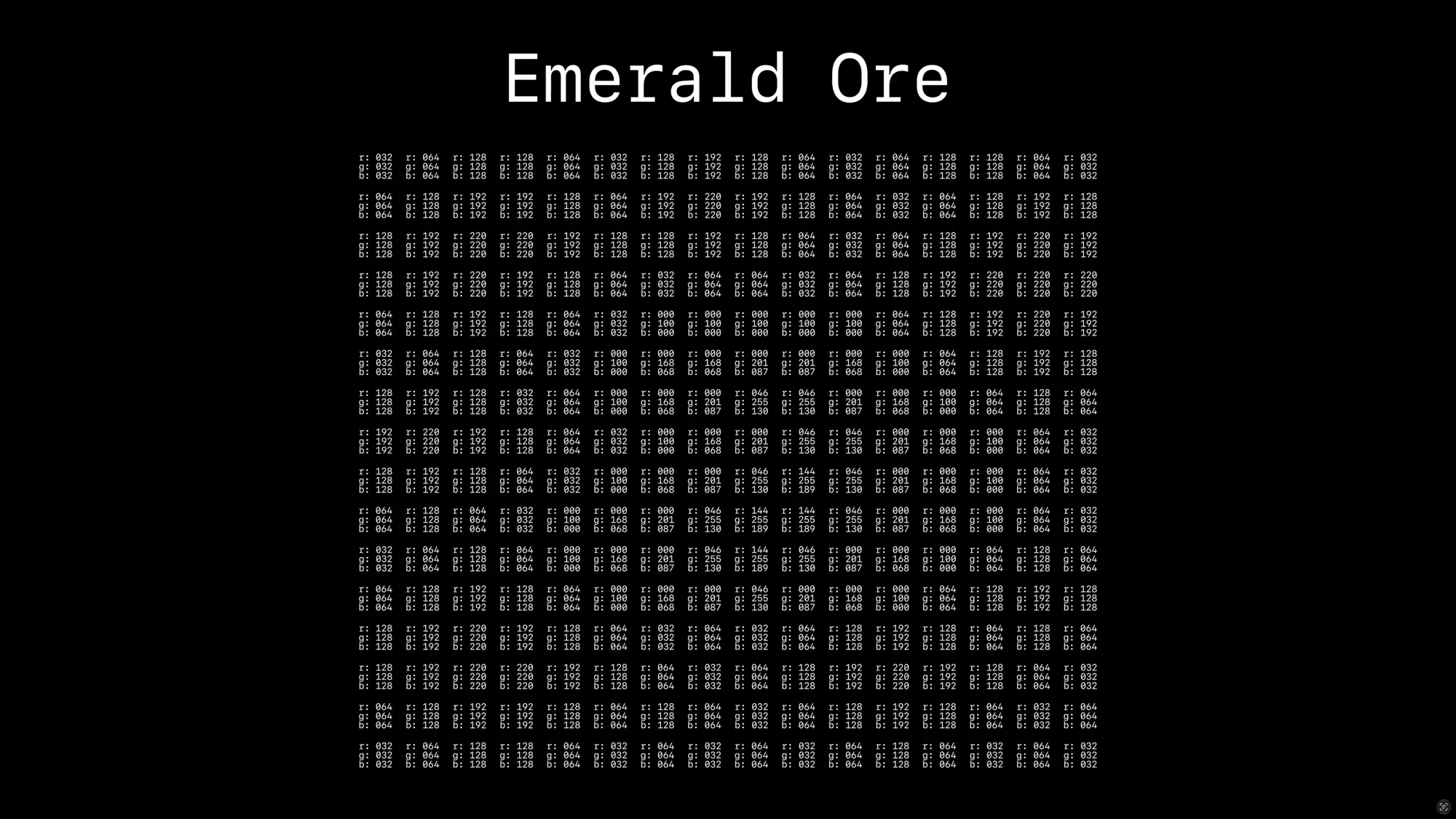
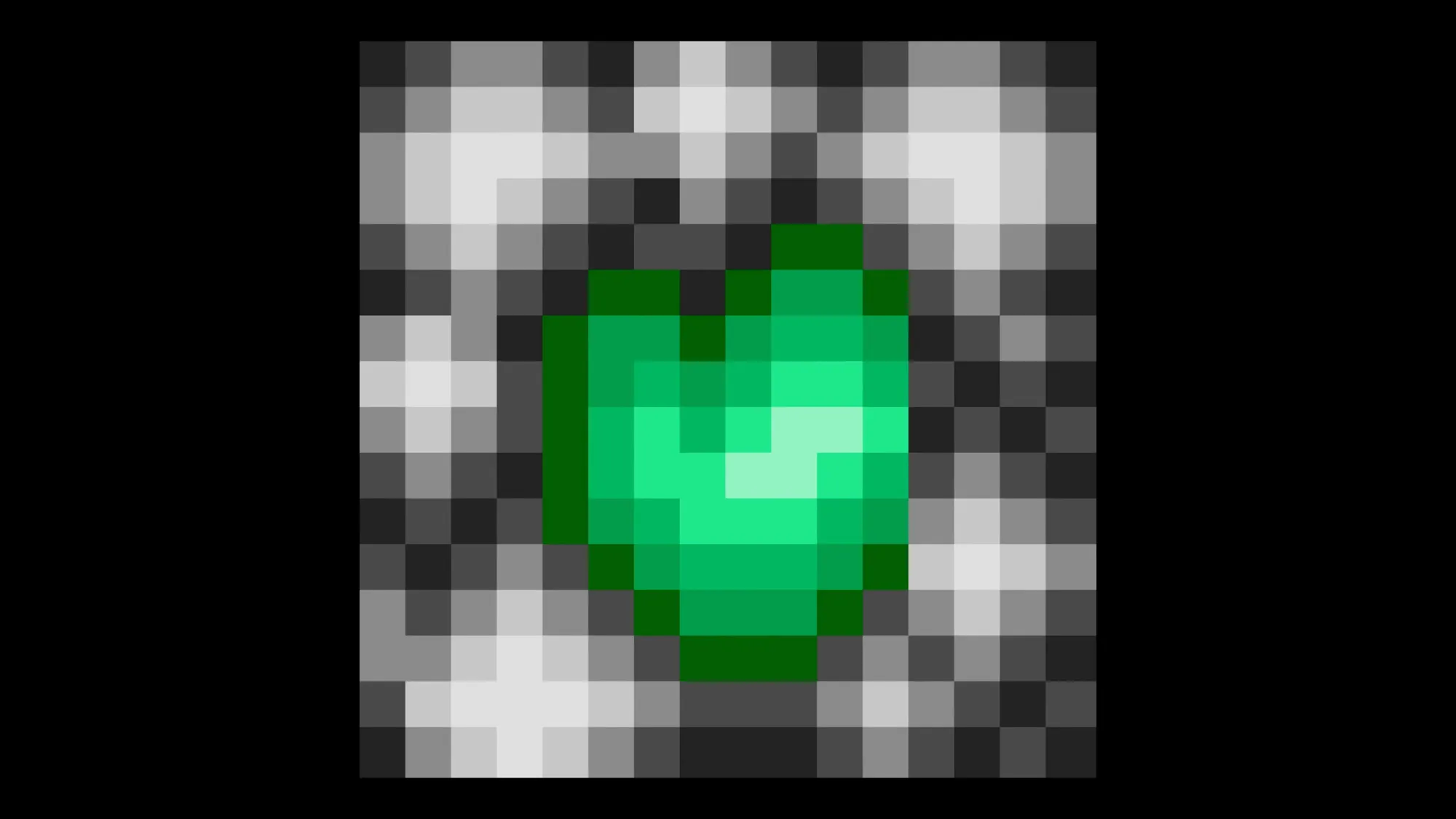 First approach: one RGB value per pixel.
The better version has the model define a small color palette first, then fill the 16×16 grid with palette indices instead of colors. It’s quicker, uses fewer tokens, and is more accurate, so each pack costs less to generate.
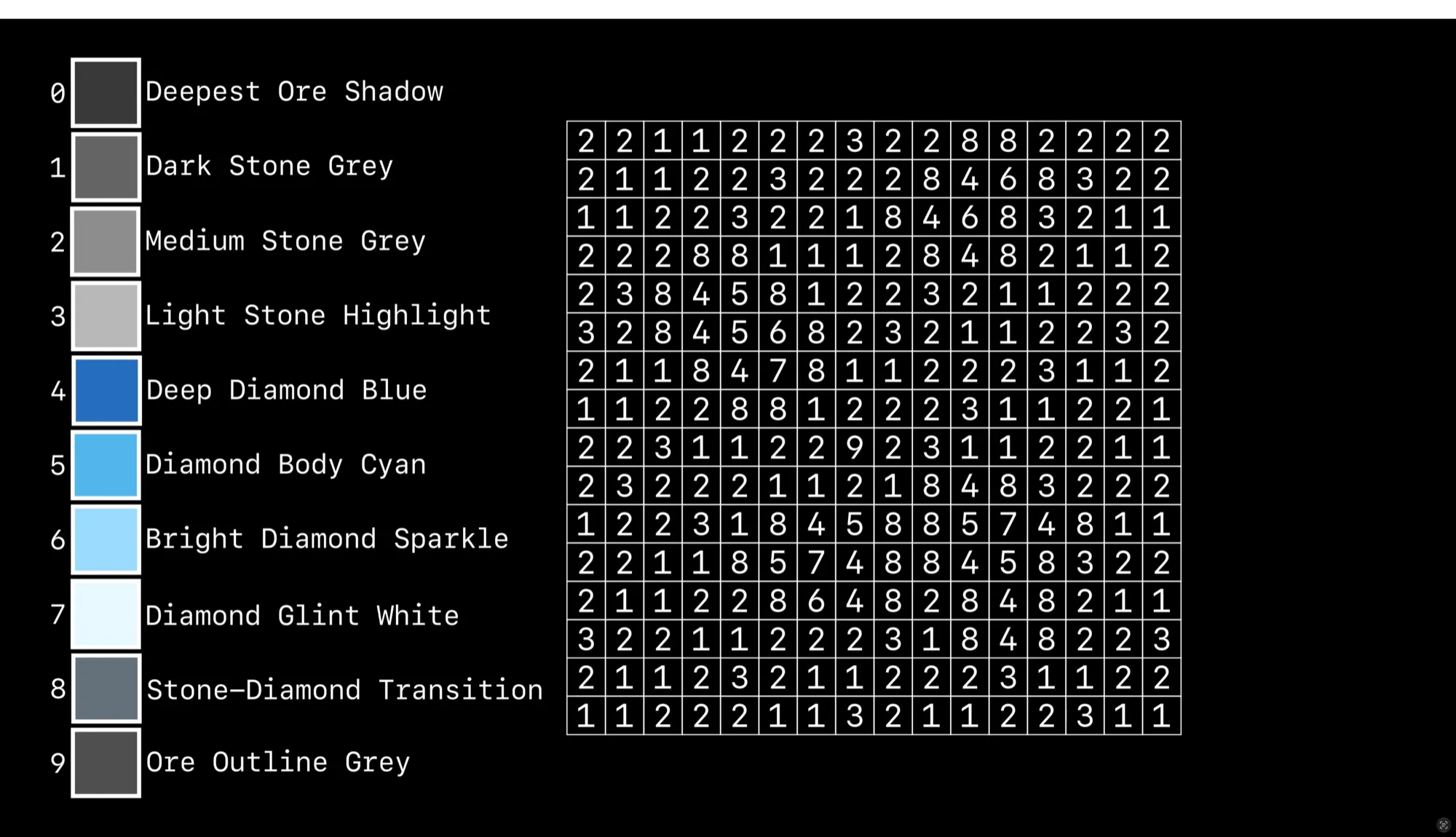
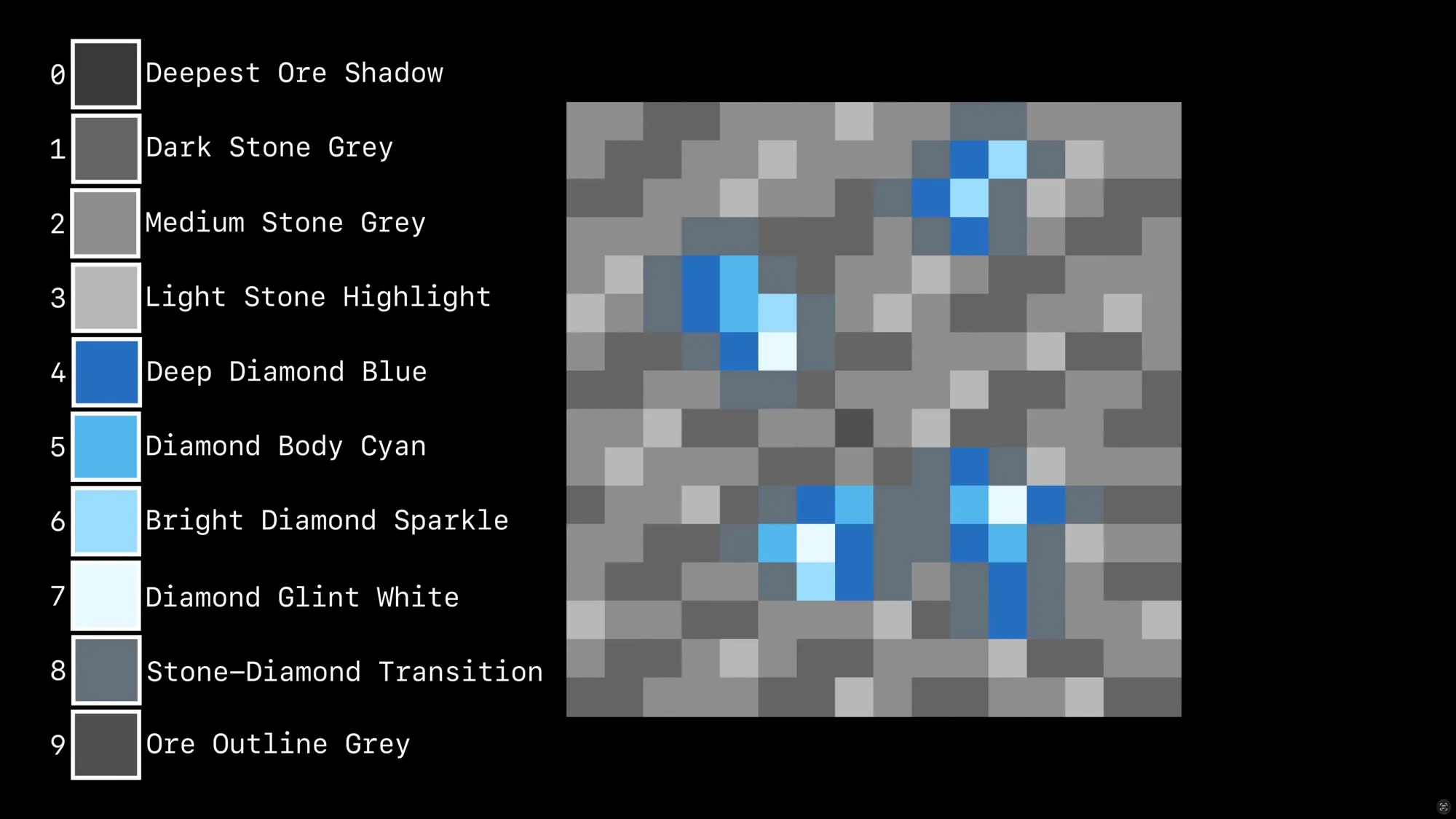 Final approach: a named palette plus a grid of indices.
The results
Gemini 2.0 Flash
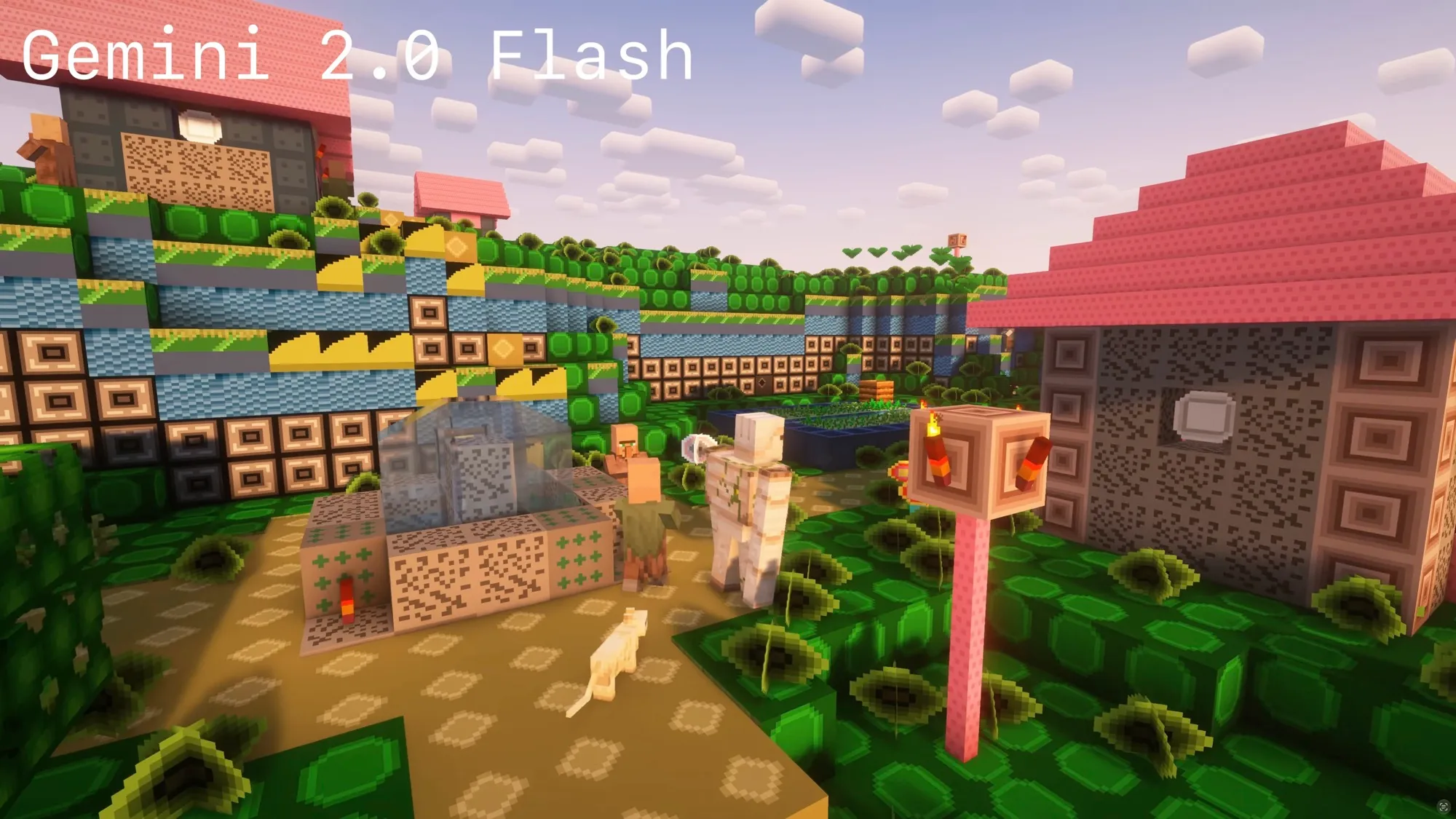
I started with a cost-effective model to iterate quickly and set expectations. It produced pink wood, blue dirt, and cobblestone with only two colors. The textures were geometric with little of the randomness a texture pack needs, and the End was the worst dimension: the iron bars weren’t even transparent, the obsidian had an odd gradient, and the bedrock was orange.
GPT-4.1
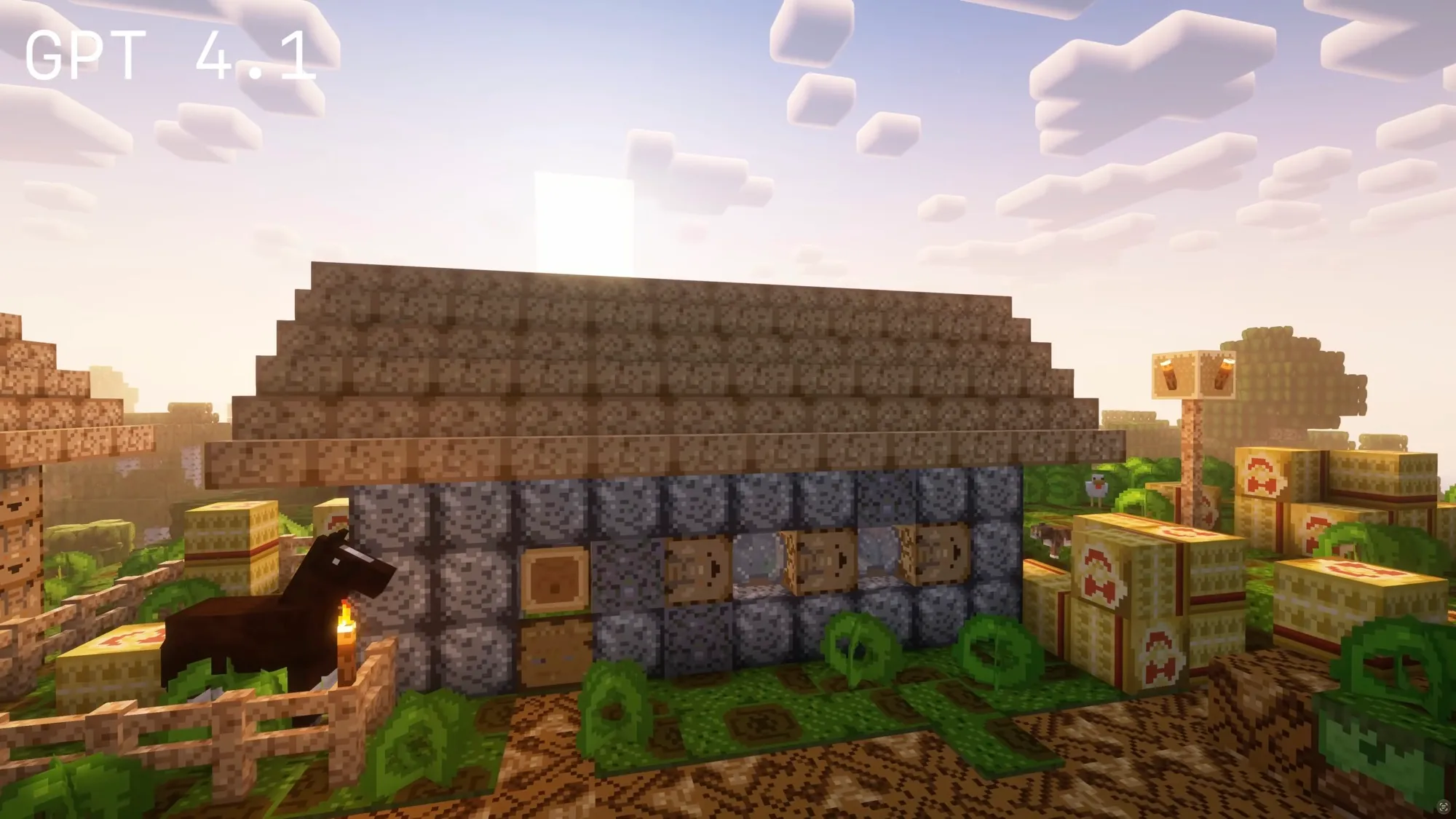
A big step up, with far more randomness in the textures and nice-looking hay blocks. It leaned a little too hard on noise, which made some blocks look too retro, but it got transparent iron bars and good end stone and bedrock. It took first place.
Claude 3.7 Sonnet
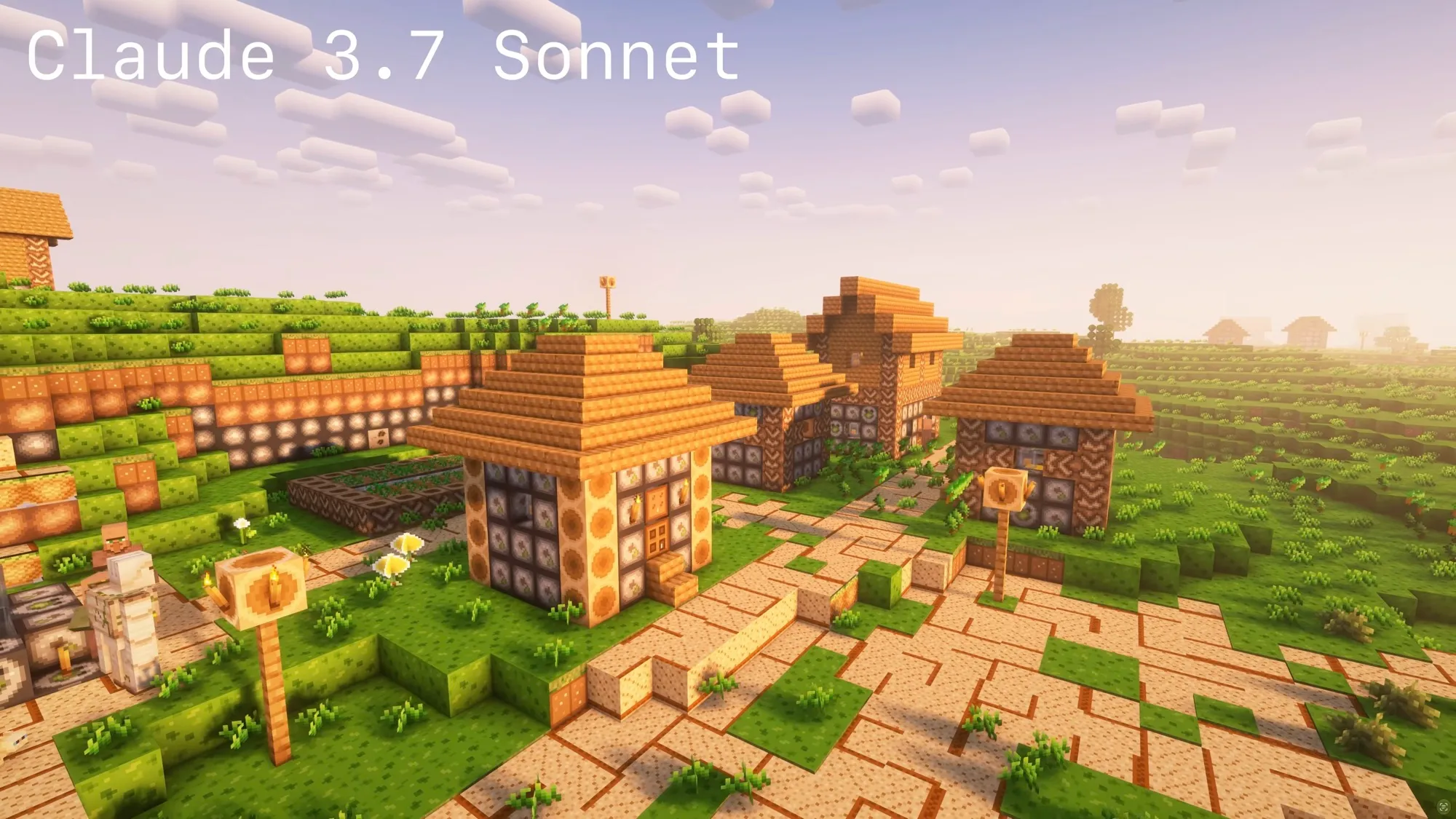
I had high expectations, and this pack was expensive to generate. The oak logs on the village roofs and the cobblestone stood out in a bad way, and the model kept making round, circular textures that look off when tiled in a grid. The iron bars looked good from a distance. Second place at this point.
Gemini 2.5 Pro
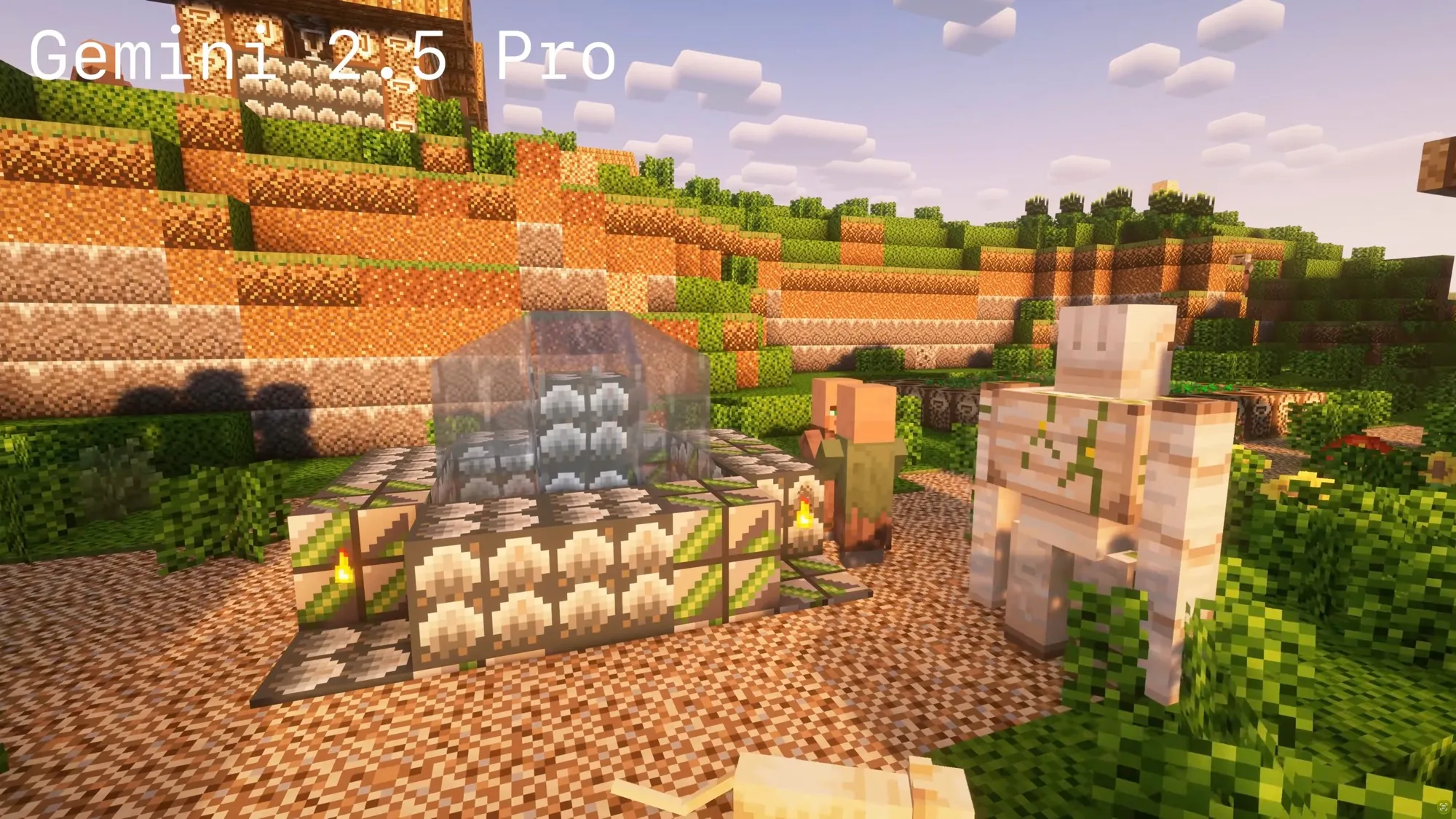
By far the best pack. The cobblestone and mossy cobblestone looked great, the dirt and grass matched, and everything had a uniform feel. The iron bars looked like they came from a human-made texture pack. It went straight to first place.
o4-mini
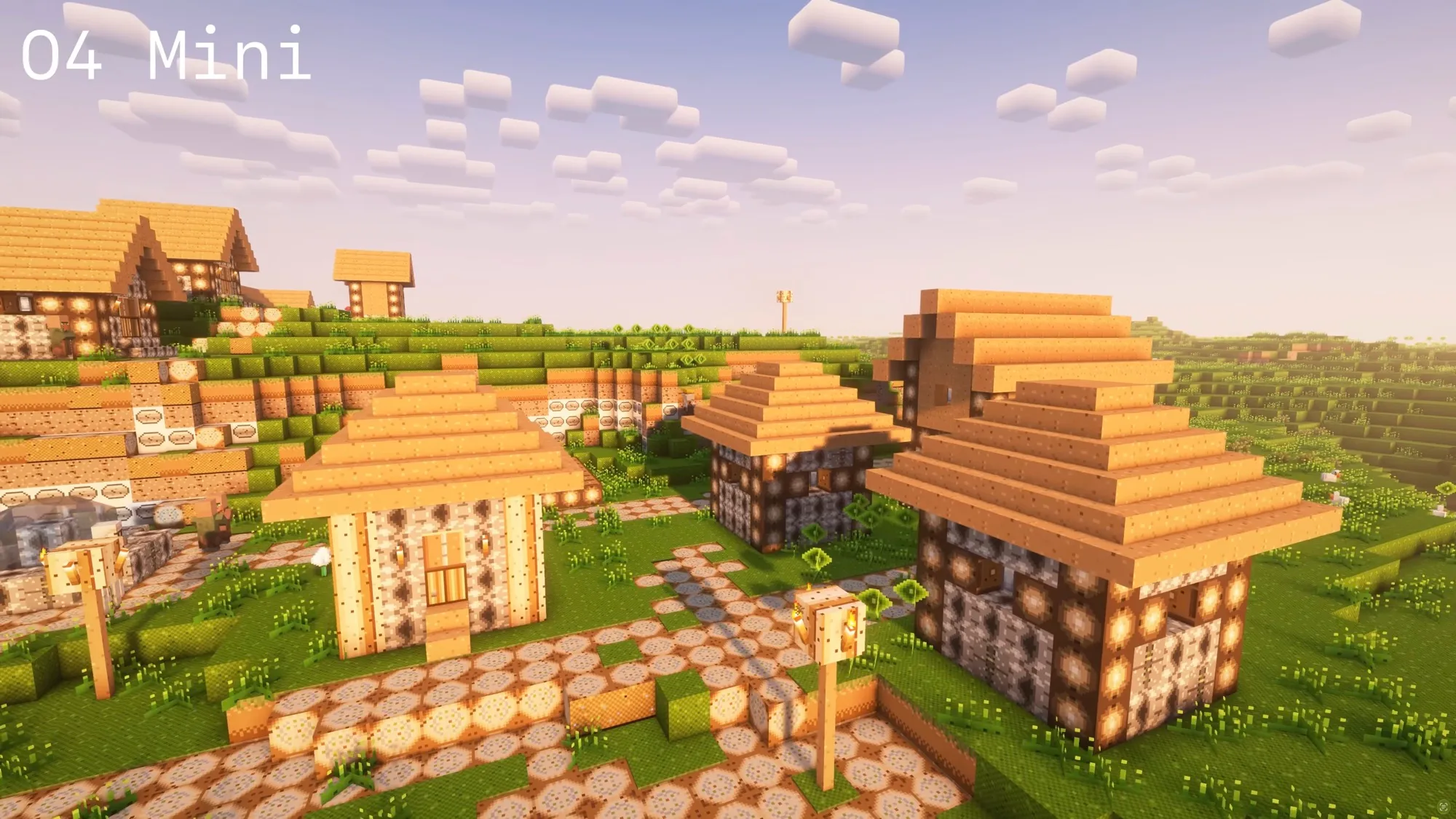
The dirt had strange colors and oval shapes, the leaves were geometric, and the bone blocks had only a few colors. It did get the iron bars right, but the obsidian had visible banding. Third place, right under GPT-4.1.
Claude Opus 4
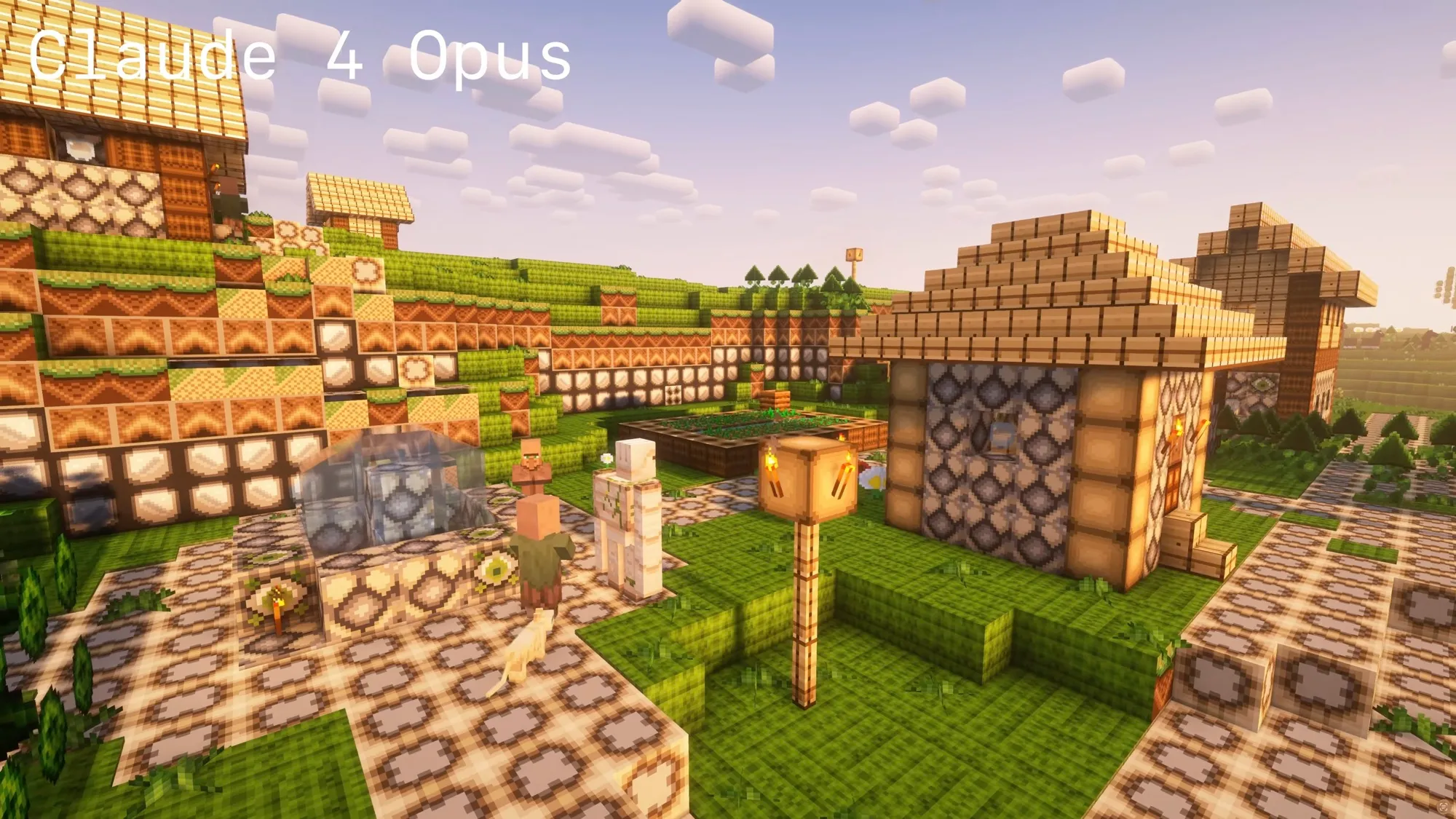
Anthropic’s top model at the time and very expensive to run, but several cheaper models beat it. The cobblestone didn’t match the rest of the pack, the leaves were weak, and the iron bars didn’t connect. Fourth place.
Final ranking
- Gemini 2.5 Pro
- GPT-4.1
- o4-mini
- Claude Opus 4
- Claude 3.7 Sonnet
- Gemini 2.0 Flash
What I learned
- Every model struggled with the Nether. There’s probably little training data for netherrack or soul sand outside Minecraft itself.
- Obsidian and end stone were weak across the board, with little real texture in any pack.
- A texture can look fine alone and still tile badly. Circular gradients were the most common problem.
- Price didn’t track quality. The most expensive models didn’t make the best packs, and the total cost of the experiment was enough to make my jaw drop.